Names & Legend
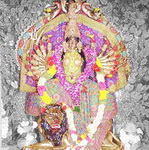
At the Bhairava Parvat Shakti Peeth the Divine Mother is honoured as the goddess of the ancient city of Avanti, and she is also called Ujjaini. The city’s glory is described in many places in the Mahabharata and the Puranas.
When Lord Shiva carried the body of Sati after her self-sacrifice at Daksha’s yagna, Lord Vishnu divided it with his Sudarshan Chakra to end Shiva’s fierce Tandava. At Bhairava Parvat, Sati’s upper lip is believed to have fallen (some texts mention her elbow).
Location
The Shakti Peeth stands on the Bhairav hill on the bank of the Shipra (also written Kshipra) river in Ujjain, Madhya Pradesh. Ujjain lies in the Malwa region of central India and is one of the oldest living cities in the country.
The Goddess & Bhairava
The Goddess is worshipped as Avanti, named after the ancient kingdom whose capital was Ujjain, then known as Avantikapuri. Lord Shiva as Bhairava is called Lambakarna, “the long-eared one”, who is said to hear every prayer of his devotees. Ujjain is also a city of Bhairava worship, and the famous Kaal Bhairav temple, where liquor is offered to the deity, is nearby.
The Sacred City of Ujjain
Ujjain is counted among the Sapta Puri, the seven holy cities of Hinduism whose pilgrimage is said to grant liberation. It is home to the Mahakaleshwar Jyotirlinga, one of the twelve Jyotirlingas of Lord Shiva, famous for its dawn Bhasma Aarti.
The city is one of the four places that host the Kumbh Mela – here called the Simhastha – held about every 12 years, when millions of pilgrims bathe in the Shipra. Ujjain is also where Lord Krishna, with Balarama and Sudama, studied at the ashram of Sage Sandipani. From around the 4th century BCE, Indian astronomers treated Ujjain as their prime meridian, and the old observatory, the Vedh Shala, can still be visited.
Festivals & Worship
Navaratri is the main festival of the Goddess, when the shrines of Ujjain are lit with lamps and devotees keep fasts and night vigils. Maha Shivaratri, the month of Shravan with the grand processions of Lord Mahakal, and the Simhastha Kumbh are the other great occasions in the city.
Spiritual Significance & Visiting Tips
The lips are linked with speech and with the sacred sound of mantras. Devotees pray to Goddess Avanti for the purity of their words and for success in learning, music and recitation – fitting for Ujjain, a city long famous for its scholars, poets and astronomers. Many pilgrims also pray here at the time of the Simhastha, when the whole city becomes a vast camp of saints and seekers.
Ujjain’s temples are close together, and a day or two is enough to visit the main shrines. Start early for the Bhasma Aarti at Mahakaleshwar (advance booking is required), then visit the Shakti Peeths and the ghats of the Shipra. Dress modestly, remove footwear before entering the shrine, and follow the instructions of the priests. Simple offerings such as flowers, fruit, vermilion, a red chunri and incense are traditional, and it is good practice to buy them from the stalls near the temple, which also supports local families.
How to Reach & When to Visit
Ujjain has its own railway station with good connections across India, and the nearest airport is at Indore, about 55 km away. The winter months from October to March are the most pleasant for visiting the temples. Many pilgrims combine a visit to the Shakti Peeth with darshan at Mahakaleshwar, Harsiddhi Mata, Kaal Bhairav and the ghats of the Shipra.