Names & Legend
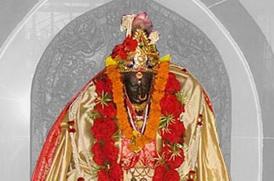
Each Shakti Peeth has its own form of the Goddess and its own story, and Bahula is one of the best-loved pilgrimages of Bengal. The temple stands in a quiet village near the bank of the Ajay river.
According to the legend of the Shakti Peeths, Lord Shiva roamed the universe carrying the body of Sati after she gave up her life at Daksha’s yagna. Lord Vishnu divided her body with the Sudarshan Chakra, and every place where a part fell became sacred. At Bahula, Sati’s left arm is believed to have fallen.
Location
The Shakti Peeth is at Ketugram, near Katwa in Purba Bardhaman district of West Bengal. It is about 190 km from Kolkata and about 56 km from the city of Bardhaman, which makes Bardhaman a convenient starting point for the journey.
The Goddess & Bhairava
The Goddess is worshipped as Bahula, a name that means “abundant” – she is the mother who gives plenty to her devotees. Lord Shiva as Bhairava is called Bhiruk, also known as Sarvasiddhidayaka, “the giver of all accomplishments”. Devotees believe that the Goddess here fulfils all sincere wishes.
Every morning the Goddess is offered sweets, fruits and other produce of the land. The temple is well maintained, and many visitors combine their puja with a peaceful walk along the river bank.
Interesting Facts
The region around Katwa and the Ajay river has a long spiritual history; it is closely linked with the Vaishnava saint Sri Chaitanya Mahaprabhu, who took sannyasa at Katwa. Pilgrims often visit Bahula together with nearby shrines such as Attahas and the other Shakti Peeths of Bengal, making a circuit of the sacred sites of the Divine Mother.
Because the arm is a symbol of strength and protection, devotees pray to Goddess Bahula for courage, success in work and the protection of their families.
Festivals & Worship
The most important festivals here are Durga Puja, celebrated with special rituals, Kali Puja, Maha Shivaratri and Navaratri. Fairs are also held during Shivaratri and Navaratri, when the village fills with devotees, music and stalls selling puja items and local sweets.
Spiritual Significance
The arm is the symbol of action, strength and protection. When devotees pray to Maa Bahula, they ask for the power to work honestly and successfully, to protect their families and to help others. Farmers of the region traditionally seek her blessings before sowing and harvesting, offering the first fruits of the season in thanks for her abundance.
Her Bhairava, Bhiruk, is worshipped as the giver of all accomplishments, so students before examinations and people starting a new job or business also come here to pray. The calm setting by the Ajay river makes the shrine an ideal place for quiet prayer, japa and meditation away from the crowds of the cities.
Visiting Tips
The temple is in a village, so facilities are simple; it is best to visit during the day and to stay overnight in Katwa or Bardhaman if needed. Dress modestly, remove footwear before entering the shrine, and follow the instructions of the priests. Simple offerings such as flowers, fruit, vermilion, a red chunri and incense are traditional, and it is good practice to buy them from the stalls near the temple, which also supports local families.
How to Reach & When to Visit
The nearest railway station is Katwa (Katoa), from where Ketugram is easily reached by bus or auto. Trains from Kolkata’s Howrah and Sealdah stations run to Katwa, and the road journey from Bardhaman is short. The best time to visit is from October to March, when the weather is cool and the major festivals take place.